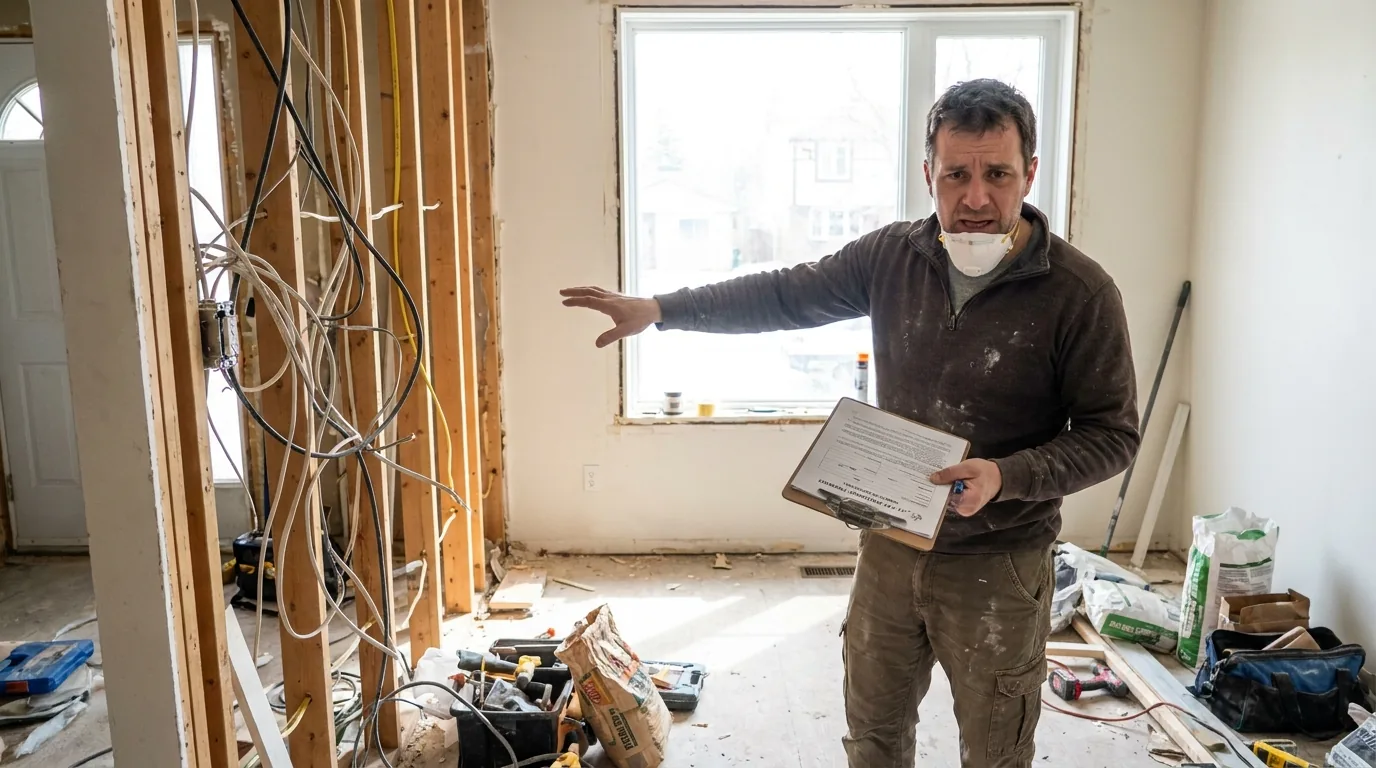
"You'll save the permit fee if you pull it yourself." We've seen this line in print, on quotes, and in conversations across Ottawa for years. Sometimes it's offered as a favour.
Sometimes it's offered as a way to win a bid. In almost every case, what gets sold as a savings is a transfer of liability from the contractor to the homeowner.
The City of Ottawa allows homeowners to pull permits on their own property. The MyServiceOttawa portal accepts owner-pulled applications without question. The fee is the same whether the homeowner or the contractor applies. The savings claim is fiction.
What changes when you pull the permit yourself is who the city considers responsible for the work. That shift has consequences most homeowners don't think about until something goes wrong.
What pulling the permit actually means
The person whose name is on the permit application is, in the eyes of the City of Ottawa, the legally responsible party for the work being performed. The permit names that person as the "owner" or "permit holder," and that person is the one the city contacts for inspections, code violations, stop-work orders, and any disputes that arise.
When the contractor pulls the permit, the contractor is the responsible party. The contractor's name appears in city records as the builder. Code issues, missed inspections, and structural concerns route to the contractor first.
When the homeowner pulls the permit, the homeowner becomes the responsible party. The homeowner is the legal "builder" in the eyes of the city, regardless of who is physically doing the work. This is not a paperwork formality; it has real-world consequences in four areas.
Risk 1: If the contractor walks off the job
This is the biggest one, and it happens more often than people think. A contractor abandons a project mid-construction. Cash flow problem, dispute, double-booking, sometimes just disappearing. Whatever the reason, the work is half-done and the contractor isn't coming back.
If the contractor pulled the permit: the city has the contractor on file. The homeowner's path to closure is to either get the contractor to return (legal pressure, lien release threats), find a new contractor willing to take over a job-in-progress (rare and expensive), or have the original contractor's permit transferred to a new builder.
If the homeowner pulled the permit: the homeowner is the legal builder. The new contractor doesn't need to take over a permit because the homeowner already holds it. That sounds easier, but it usually isn't. The new contractor sees an abandoned job, doesn't know what was actually built versus what was on the drawings, and inherits responsibility for everything that's already in place.
Most reputable Ottawa contractors decline these jobs entirely. The homeowner is left with a half-built renovation and limited options.
The deeper issue: with the homeowner-pulled permit, the contractor who walked has no permit-related obligation to come back. They might have contractual ones, but the city isn't on your side; the city sees the homeowner as the responsible party.
Risk 2: Insurance complications
Most homeowner insurance policies include a clause about renovations. Some require notice. Some require permits. Some require the work to be done by licensed contractors. Some cover damage during construction; some don't.
When the contractor pulls the permit and carries commercial liability insurance, the contractor's insurance is the primary coverage during construction. If a fire starts during demolition, if a worker falls through the kitchen ceiling, if a water main breaks, the contractor's policy responds first.
When the homeowner pulls the permit and the contractor is positioned as a "labourer" working under the homeowner's authority, some insurance companies treat the homeowner as the prime contractor for coverage purposes. That can shift risk to the homeowner's policy, which typically has lower limits, higher deductibles, and exclusions for "construction work."
Worse: some contractors who push homeowners to pull permits are doing so because their own liability coverage is insufficient or non-existent. The "you pull the permit, you keep the savings" pitch is, in those cases, a way to remove the contractor from the line of responsibility entirely. If you find yourself in that situation, you're insuring a renovation crew with your own home insurance.
The insurance question to ask
Call your home insurance broker before pulling any permit. Ask: "If I pull the permit and hire a contractor, who is the prime insurance coverage during construction?" Their answer will tell you a lot. Then ask: "What if the contractor doesn't have liability insurance?" That answer will tell you the rest.
Risk 3: ESA electrical inspections fall on you
This one catches Ottawa homeowners off guard. The Electrical Safety Authority (ESA) inspects all electrical work in Ontario. The inspection fee, the failure-to-inspect fines, and the responsibility for ensuring inspections happen all fall on the permit holder.
If the contractor pulls the electrical permit (which they do under their own ECRA/ESA contractor licence), they handle all of this. They book the rough-in inspection, the final inspection, and the closeout. The cost is included in their quote. ESA's contact is the licensed electrician.
If the homeowner pulls the permit and the electrician is working under the homeowner's licence (called a "Homeowner Electrical Permit"), the homeowner is the one ESA holds responsible. The homeowner books inspections. The homeowner pays the inspection fees. The homeowner is the one ESA fines for missed or failed inspections.
This is a meaningful problem in real renovations. ESA inspections happen at specific stages (rough-in before drywall, final after fixtures). The homeowner who's at work all day has to coordinate inspector visits, contractor presence, and permit closeouts. Mistakes (missing the inspection window, drywalling before rough-in approval) create real costs and delays.
Risk 4: Title issues at sale
Permits show up on title searches when you sell. Specifically, real estate lawyers in Ottawa check whether all open permits have been closed out (final inspection passed, permit signed off by the city). An open or expired permit on title is a deal-killer or a price reduction.
If the contractor pulled the permit and didn't close it out, the homeowner has to chase the contractor (often years later, often when the contractor's business has changed) to complete the closeout. This is annoying but legally clean: the contractor is the named party, and there's a path to compel closure.
If the homeowner pulled the permit and didn't close it out, the homeowner has to do the closeout themselves. That means scheduling the final inspection, possibly redoing work the inspector flags, and possibly hiring a new contractor or BCIN designer to complete drawings or as-built documentation if the original drawings are out of date. All of this happens while the house is listed and the buyer's lawyer is waiting.
I've seen this kill three Ottawa sales in the last five years. The homeowner had pulled a basement permit during a renovation 8 years earlier, never closed it out, and only discovered the open permit during the title search. Closeout took 4 months. The buyer walked. The seller had to relist at a lower price.
When does owner-pulled make sense?
It's not always wrong. There are real cases where pulling your own permit is reasonable:
- You're doing the work yourself. Genuine DIY projects (a single bathroom rebuild, a deck) where you're the actual builder. The permit reflects reality.
- Multiple separate trades. If you're hiring an electrician, a plumber, and a tiler as three independent contractors with no general contractor coordinating, you're acting as the GC and pulling the permit makes sense.
- Family or friend doing labour. A relative who's a licensed tradesperson is doing the work informally. Permit needs to be in your name because there's no contractor entity.
- Small, simple projects. A deck, a fence permit, an interior non-structural change with no electrical or plumbing.
What links these cases: in each, the homeowner is genuinely the builder or has limited risk exposure. The permit name matches the actual project structure.
When it's a flag
The homeowner-pulled permit becomes a problem when it doesn't match reality. Specifically, when a contractor is doing all the work, charging a full general-contractor fee, but pushing the homeowner to pull the permit anyway.
Common reasons a contractor pushes for homeowner-pulled permits:
- The contractor isn't BCIN-certified for design and can't sign off on drawings themselves.
- The contractor's liability insurance doesn't cover the type of work.
- The contractor has had previous bad experiences with the city (failed inspections, permit issues) and doesn't want their name on the file.
- The contractor wants to remove themselves from the legal hook if the project goes badly.
- The contractor doesn't carry the kind of business structure (corporation, master business licence) that the city looks for on contractor-pulled permits.
None of these reasons are good for the homeowner. Each of them transfers risk from the contractor to the homeowner without commensurate cost savings.
The permit name reflects who the city believes is responsible. Match the name to who is actually responsible. Anything else is a transfer of risk dressed as a favour.
What we do at Dream Touch
On every Dream Touch project requiring a permit, we pull the permit ourselves. The fee is included in the project cost; there's no separate line. Our BCIN designation lets us sign off on most residential design work; for structural elements, we coordinate with a licensed engineer. Our commercial liability insurance covers the project from demolition to closeout. Our name is the one the city contacts.
This isn't generosity; it's how a competent contractor structures their business. The permit liability sits with the party that has the licence, the insurance, and the responsibility for the work. The homeowner is the client, not the builder.
If you'd like to see what an Ottawa contractor-pulled permit process looks like end-to-end, including drawings, structural engineering, ESA permits, and closeout, that's our standard workflow. The conversation at the consultation includes who pulls what, on what timeline, with what coverage. Clarity here saves complications years out.
Frequently asked questions
Do I save money by pulling the building permit myself in Ottawa?
No. The City of Ottawa charges the same permit fee whether the homeowner or the contractor applies, so the savings claim is fiction. What changes is responsibility. The person named on the permit is, in the City's eyes, the legally responsible party for the work, and the one contacted about inspections, code violations, stop-work orders and disputes.
A homeowner who pulls the permit becomes the legal builder, whoever does the work.
What happens if a contractor abandons a job on a homeowner-pulled permit?
When a contractor walks off a job and the homeowner holds the permit, the homeowner is already the legal builder, and the departing contractor has no permit-related obligation to return. Any new contractor inherits an abandoned job without knowing what was built versus what was drawn, and becomes responsible for everything in place. Many reputable contractors decline those jobs, leaving the homeowner with a half-built renovation and few options.
Who books ESA inspections when the homeowner holds the electrical permit?
Under a Homeowner Electrical Permit, the Electrical Safety Authority holds the homeowner responsible. The homeowner books the inspections, pays the inspection fees and faces ESA fines for missed or failed inspections. Inspections happen at set stages, rough-in before drywall and a final after fixtures, so drywalling before rough-in approval causes real cost and delay. When a licensed electrical contractor pulls the permit, the contractor handles all of it.
Can an open permit block the sale of an Ottawa home?
Yes. Real estate lawyers in Ottawa check whether every permit on a property has been closed out with a passed final inspection, and an open or expired permit can kill a deal or force a price reduction.
If the homeowner pulled the permit, the homeowner must schedule the final inspection, fix anything flagged and possibly commission updated drawings, all while the buyer waits. One such closeout took 4 months, and the buyer walked.
When does it make sense for a homeowner to pull their own permit?
Pulling your own permit makes sense when the homeowner really is the builder. That covers genuine DIY work such as a single bathroom rebuild or a deck, hiring separate trades like an electrician, plumber and tiler with no general contractor, a relative who is a licensed tradesperson working informally, and small simple jobs with no electrical or plumbing.
It is a warning sign when a full-fee general contractor pushes the homeowner to pull it.
Official references
- Do I need a building permit?, City of Ottawa